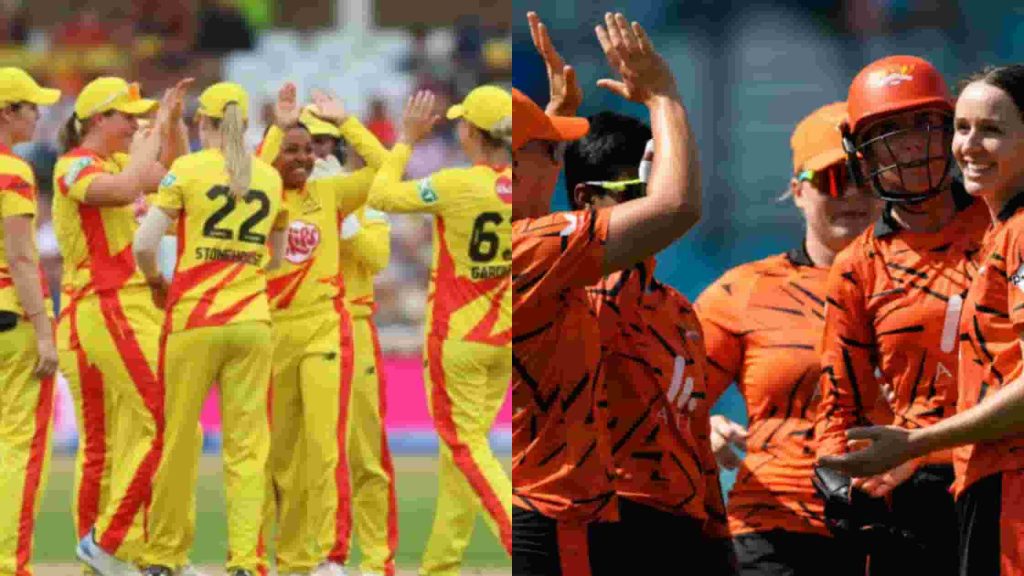
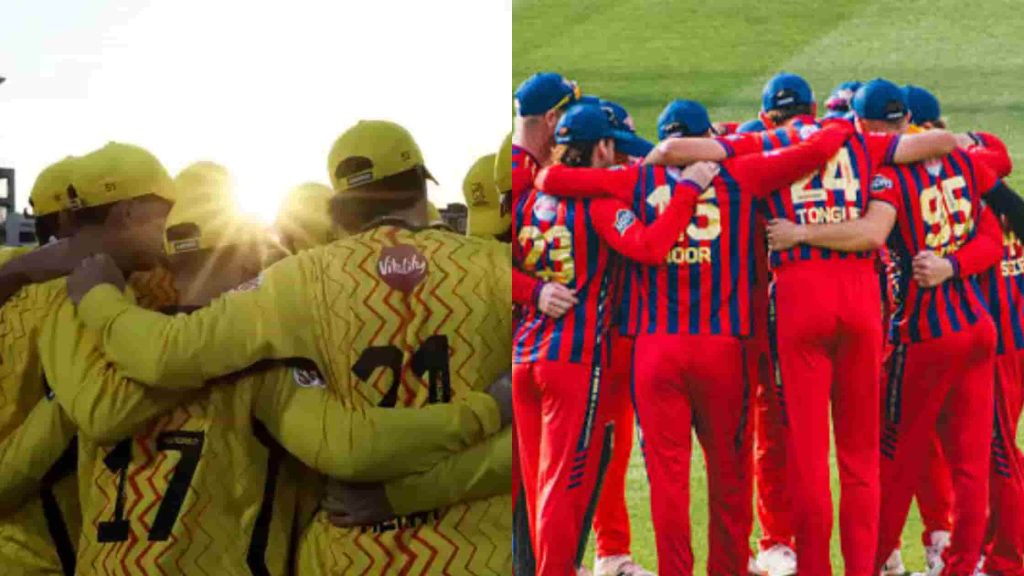
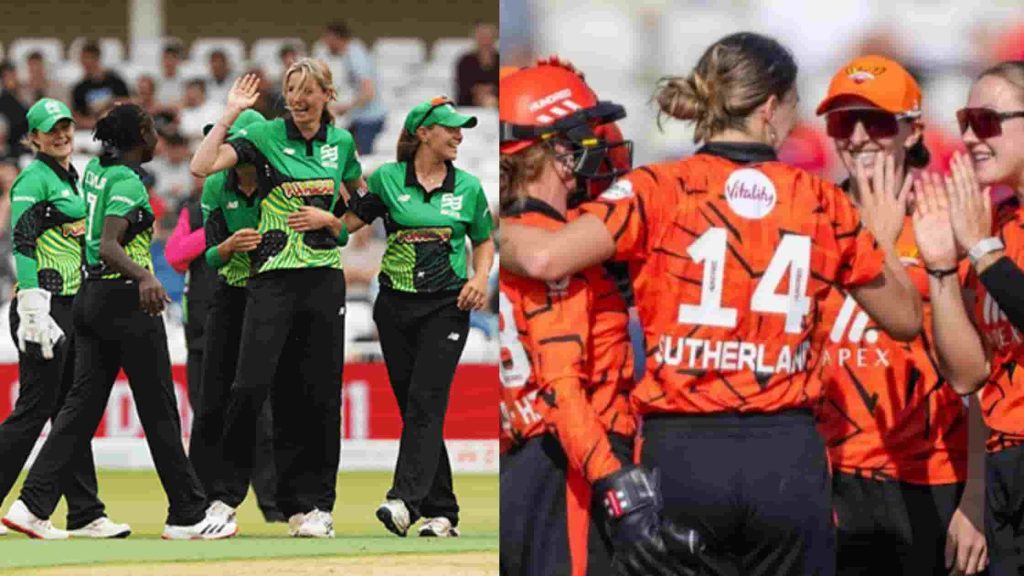
The T20 franchise ownership model works like this: a private company or investor group buys the rights to a city-based team, then runs it as a business.
Owners pay the league’s board a fee, then earn money back through media rights, sponsorship and ticket revenue, the same way any other private enterprise does.
It replaced cricket’s older system, where players simply represented the region or country they came from.
By 2026, the same ownership groups increasingly hold teams in several leagues at once. Here’s exactly how franchise ownership works, and who owns what.
What Is the T20 Franchise Ownership Model?
A T20 franchise is a privately owned cricket team tied to a city, not to a country or a state. Anyone with enough capital can buy in, as long as the league’s governing board approves the deal.
That’s the whole idea in one line. A company buys the rights to field a team, then runs it for profit. This is different from how cricket worked before franchise leagues came along.
County cricket in England and Ranji Trophy sides in India are member clubs or board-run teams, tied to where a player is from. Franchise cricket flipped that model. Teams stay fixed to a city, but the roster gets built from anywhere in the world.
Squads are usually assembled through an auction or a draft, not by geography or eligibility. Ownership typically comes with three things: a license bought from the league’s board, a share of central revenue, and control over local sponsorship and ticketing.
In return, owners follow the board’s rules on salary caps, squad composition and how many overseas players they can field. One league bucks this trend almost entirely. The Big Bash League in Australia is still run by Cricket Australia and its state associations rather than private owners.
That’s starting to change too, and we’ll get to why later in this piece.
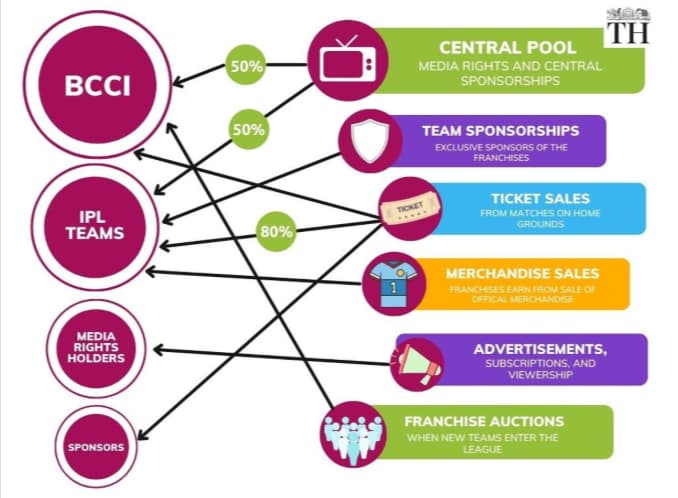
How Franchise Ownership Actually Works
Here are the Details of How IPL Franchise Ownership Works:
Buying In: Franchise Fees and Bids
Getting an IPL license today costs a genuine fortune.
When the BCCI added two teams in 2021 for the 2022 season, RPSG Group paid ₹7,090 crore for the Lucknow team, and CVC Capital paid ₹5,625 crore for the Ahmedabad team.
Together, those two deals were valued near $1.7 billion, for licenses running a decade or longer.
That resale market has since exploded. In March 2026, Diageo’s Indian arm sold its full stake in Royal Challengers Bengaluru to a consortium including Aditya Birla Group and Blackstone.
The deal was valued at $1.78 billion, the most expensive cricket team sale on record at the time.
Weeks later, Rajasthan Royals sold to a group led by steel magnate Lakshmi Mittal and Serum Institute chief Adar Poonawalla, for around $1.65 billion.
That deal also covered the team’s sister franchises abroad, Paarl Royals in South Africa and Barbados Royals in the Caribbean.
Other leagues price entry very differently.
PSL’s original six-team launch in 2016 sold five franchise licenses for a combined $93 million.
Pakistan’s board is now selling two new PSL licenses, on top of steep annual fees and a guaranteed revenue floor.
Where the Money Actually Comes From
Franchise revenue usually splits three ways.
The biggest slice is the central pool: media rights and league-wide sponsorship, collected by the board and shared among teams.
In the IPL, the current formula gives roughly 50% to the BCCI, 45% split equally among the ten franchises, and 5% out as prize money.
The second slice is local revenue: a team’s own sponsors, jersey branding, home-match ticket sales, and merchandise.
The third slice is the franchise’s own rising value. A well-run team simply becomes worth more over time.
That’s exactly why so many owners now treat cricket franchises as long-term financial assets, not passion projects.
Building the Squad: Auctions vs Drafts
Two systems dominate squad-building across world cricket.
The IPL runs a live auction, where franchises bid against each other for players under a fixed salary cap.
The IPL’s total salary cap climbed to ₹151 crore per team for the 2026 season, on a path to ₹157 crore in 2027.
A match fee of ₹7.5 lakh per player, per game, was also introduced from the 2025 season onward.
Retentions and the Right to Match card let teams hold onto familiar faces before bidding even starts.
Most other leagues run a draft instead, where teams pick players in turn from a ranked pool.
Drafts cost less to run and tend to spread talent more evenly, but they generate far less drama than an open auction.
The IPL’s success with the auction format is exactly why it keeps getting copied elsewhere, even where a draft might suit a smaller league better.
The IPL’s Ownership Blueprint
The numbers keep climbing every single year.
The IPL’s business value crossed $20 billion for the first time in 2026, according to a Houlihan Lokey valuation report.
That followed a value of $18.5 billion in 2025, itself up 12.9% from $16.4 billion the year before.
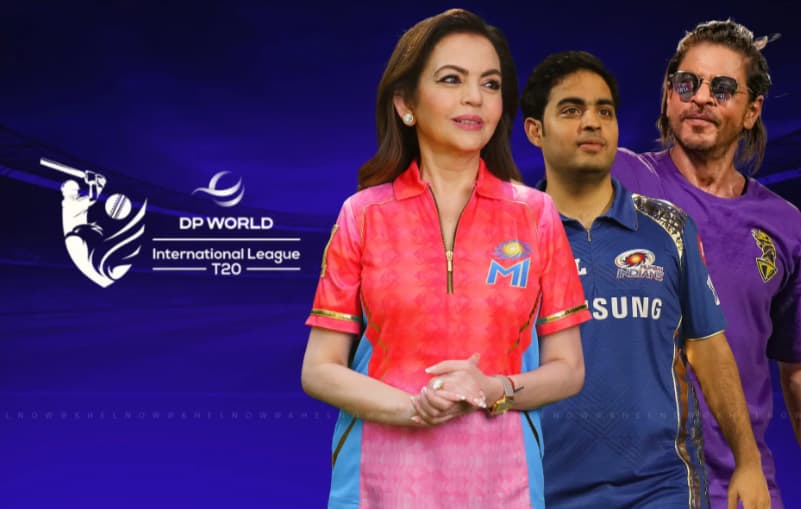
Royal Challengers Bengaluru held the top brand-value spot, becoming the first cricket team to cross $300 million in brand worth.
One Owner, One Team
There’s a specific rule behind why IPL owners keep expanding into other leagues instead of buying a second IPL team.
After the 2013 spot-fixing scandal, the Lodha Committee’s reforms were written into BCCI’s constitution.
The rules bar any individual or company from holding a financial interest in more than one IPL franchise at a time.
It closed a loophole exposed when a serving BCCI office-bearer was also found to control Chennai Super Kings.
That single rule shaped the entire ownership map of world cricket.
Unable to buy a second IPL team, owners like Reliance, GMR and Sun Group went shopping abroad instead, in South Africa, the UAE, the Caribbean, the US, and now England.
Recent Big Sales
| Franchise | Buyer | Price | Year |
|---|---|---|---|
| Royal Challengers Bengaluru | Aditya Birla Group, Times of India Group, Bolt Ventures, Blackstone | $1.78 billion | 2026 |
| Rajasthan Royals | Lakshmi Mittal family (75%), Adar Poonawalla (18%) | $1.65 billion | 2026 |
| Gujarat Titans (67% stake) | Torrent Group | ~$554 million | 2025 |
| Lucknow Super Giants (new license) | RPSG Group | ₹7,090 crore (~$940m) | 2021 |
| Gujarat Titans (new license) | CVC Capital Partners | ₹5,625 crore (~$750m) | 2021 |
Multi-Team Ownership: One Owner, Many Jerseys
The single biggest trend in franchise cricket right now is multi-team ownership, or MTO for short.
| Ownership Group | IPL Team | Other Franchises Owned |
|---|---|---|
| Reliance Industries (Indiawin Sports) | Mumbai Indians | MI Cape Town (SA20), MI Emirates (ILT20), MI New York (MLC), MI London (The Hundred, 49%) |
| GMR Group + JSW Group | Delhi Capitals | Dubai Capitals (ILT20), Pretoria Capitals (SA20), Seattle Orcas (MLC), Southern Brave (The Hundred, 49%), Hampshire CCC (51%) |
| RPSG Group | Lucknow Super Giants | Durban’s Super Giants (SA20), Manchester Super Giants (The Hundred, 70%) |
| Sun Group | Sunrisers Hyderabad | Sunrisers Eastern Cape (SA20), Sunrisers Leeds (The Hundred, 100%) |
| Knight Riders Group (Shah Rukh Khan) | Kolkata Knight Riders | Trinbago Knight Riders (CPL), Abu Dhabi Knight Riders (ILT20), Los Angeles Knight Riders (MLC) |
| Royals Sports Group | Rajasthan Royals | Paarl Royals (SA20), Barbados Royals (CPL) |
| Chennai Super Kings Cricket Ltd | Chennai Super Kings | Joburg Super Kings (SA20), Texas Super Kings (MLC, co-owned) |
One company owns branded teams in several leagues at once, often using the exact same name and colors worldwide.
Reliance’s story shows how far this idea has gone.
Indiawin Sports, under the Ambani family, now runs Mumbai Indians in the IPL, MI Cape Town in SA20, MI Emirates in the ILT20, and MI New York in MLC.
It also holds a 49% stake in The Hundred’s Oval Invincibles, rebranded MI London after the 2025 sale.
GMR Group runs a similar playbook through its joint venture with JSW for Delhi Capitals.
That extends to Dubai Capitals in the ILT20, Pretoria Capitals in SA20, Seattle Orcas in MLC, and a 51% stake in England’s Hampshire county club.
The upside for owners is obvious: shared scouting networks, shared coaching staff, and one brand fans can follow almost year-round.
The downside, raised by critics, is that a small handful of businesses now shape strategy and player movement across leagues meant to run independently of each other.
League-by-League Ownership Snapshot
Here’s how ownership structures compare across the major T20 leagues right now.
League-by-League Ownership Snapshot
| League | Ownership Structure | Notable Detail |
|---|---|---|
| IPL | Private companies/consortiums, BCCI-licensed | ₹151 crore team salary cap (2026) |
| SA20 | 100% owned by IPL franchise groups | Owners committed to 10-year terms |
| The Hundred | Hybrid: 51% host county + 49% private stake | £975 million combined 8-team valuation |
| ILT20 | Mostly IPL/CPL-linked private owners | 4 of 6 teams IPL-linked |
| MLC | Mostly IPL-linked private owners | 4 of 6 teams IPL-linked |
| CPL | Independent private owners, some IPL-linked | Founded by Cricket West Indies, 2013 |
| PSL | Private owners under PCB central control | ~95% of central pool paid to franchises |
| BBL | Cricket Australia + state associations | Privatisation process began in 2026 |
1. SA20 (South Africa): Every Team, One Source
South Africa’s premier T20 league is the most striking example of how IPL franchise models have been replicated globally, with all six teams directly controlled by Indian parent groups rather than independent local investors. The SA20 League ownership structure mirrors the IPL across the board, with MI Cape Town, Joburg Super Kings, Paarl Royals, Sunrisers Eastern Cape, Durban’s Super Giants, and Pretoria Capitals all operating under the same branding, scouting, and squad-building systems as their Indian counterparts. This 100% IPL ownership overlap makes SA20 a unique case study in how one league’s commercial success can directly shape the franchise model of an entirely different country’s T20 competition.
2. The Hundred (England and Wales): A Hybrid Model
England took a different route entirely.
Rather than sell teams outright, the ECB gave 51% of each of the eight Hundred teams to the host county.
It then sold its own 49% stake in each team to private investors, raising over half a billion pounds.
The combined valuation of the eight teams came to £975 million.
The buyer list reads like an IPL owners’ reunion.
Reliance took 49% of Oval Invincibles, now MI London, and RPSG Group took 70% of Manchester Originals, now Manchester Super Giants.
Sun Group bought Northern Superchargers outright, renaming it Sunrisers Leeds.
GMR Group bought into Southern Brave, and Chelsea co-owner Todd Boehly’s firm, Cain International, bought into Trent Rockets.
London Spirit went to a Silicon Valley consortium for £145 million, the single richest deal of the sale.
3. ILT20 (United Arab Emirates)
Six teams compete here, and most carry familiar owners.
Four of the six ILT20 franchises are owned by IPL parent companies.
Reliance runs MI Emirates, Knight Riders Sports runs Abu Dhabi Knight Riders, GMR runs Dubai Capitals, and Adani Sportsline owns Gulf Giants.
Desert Vipers belong to Lancer Capital, run by Avram Glazer, who also co-owns Manchester United and the Tampa Bay Buccaneers.
He’s a rare non-cricket name on this particular list.
4. Major League Cricket (United States)
America’s league has grown along the exact same lines.
Four of the six MLC franchises carry direct IPL ownership links.
MI New York belongs to Indiawin Sports, Los Angeles Knight Riders to the Knight Riders Group, and Texas Super Kings to Chennai Super Kings Cricket Ltd.
Seattle Orcas belongs to the GMR-linked ownership group, whose investors also include Microsoft’s Satya Nadella.
MI New York has already won two of the first three MLC titles, proof that a travelling brand can still perform on the field.
5. Caribbean Premier League
CPL was the first league outside India to prove franchise cricket could work on its own terms.
It was also the first to attract IPL ownership money, back in 2015.
Shah Rukh Khan’s Red Chillies Entertainment bought a majority stake in what became Trinbago Knight Riders.
Rajasthan Royals’ ownership group later took a majority stake in the Barbados franchise too.
Guyana Amazon Warriors remains the exception, still run by the same Guyanese pharmaceutical family that has owned it since the league’s first season in 2013.
6. Pakistan Super League
PSL runs the most centralised model among the major T20 leagues.
The Pakistan Cricket Board controls the central revenue pool directly and guarantees franchises a financial floor.
Franchises currently receive around 95% of central pool income under the latest agreement.
If any franchise’s share drops below a guaranteed minimum in a season, the PCB covers the shortfall itself.
The board is now expanding the league to eight teams, adding two new licenses with steep annual fees on top of that pool guarantee.
This model protects owners from downside risk in a way the IPL’s open resale market simply doesn’t.
7. Big Bash League: Still Waiting to Privatise
Australia’s Big Bash is the one major T20 league that has never had private team owners.
For fifteen years, it operated entirely under state and national cricket associations, shielded from the private capital reshaping every other league.
That’s finally starting to change.
In June 2026, Cricket Australia and its six state associations agreed in principle to a self-determination model.
It lets each state decide whether, and when, to sell stakes in its own clubs.
That came after an earlier, more sweeping privatisation plan stalled in April, when New South Wales and Queensland objected.
Whether the Big Bash ends up looking like the IPL, or keeps its co-operative structure, is still an open question through the rest of 2026.
Why the Ownership Model Matters for Fans
Who owns a franchise shapes almost everything a fan experiences.
Ownership decides recruitment budgets, and whether a struggling team gets fresh investment or simply gets sold.
It also decides continuity. A stable, well-capitalised owner tends to keep coaching staff and youth pathways consistent across seasons.
A distressed or exiting owner can leave a franchise in limbo mid-cycle instead, as PSL’s Multan Sultans found out recently.
Multi-team ownership adds a further wrinkle to all of this.
When one group owns a player’s franchise in two different leagues, release windows and scheduling priorities can quietly tilt in that group’s favor.
A fan watching just one league might never even notice it happening.
Conclusion: The T20 franchise ownership model has traveled a long way from its 2008 roots
What began as city teams built through an auction is now a genuinely global business.
The same handful of ownership groups run branded teams across five continents today.
The IPL still sets the financial pace, but SA20, The Hundred, ILT20 and MLC are catching up fast on the ownership side.
Even the Big Bash’s slow move toward privatisation suggests cricket’s more conservative boards are running out of reasons to resist this model.
FAQs
Not in the IPL. BCCI rules bar any single owner from holding a stake in more than one IPL franchise. Other leagues generally follow a similar rule.
Because they can’t buy a second IPL team, so they expand into leagues like SA20, ILT20, MLC and CPL instead, keeping one brand active almost year-round.
Not yet. It’s still owned by Cricket Australia and the state associations, though a 2026 agreement opened the door to future private stakes.
It depends on whether you’re buying a fresh license from the BCCI or an existing team. The two most recent sales, RCB and Rajasthan Royals, both closed above $1.6 billion in 2026.
No. Most income flows through a league-wide central pool that the board collects and redistributes. Owners then add their own local sponsorship, ticket and merchandise revenue on top.